
ProductsAutomotive motorcycle mobility

RIB ACE ™

V-Ribbed Belts for automotives

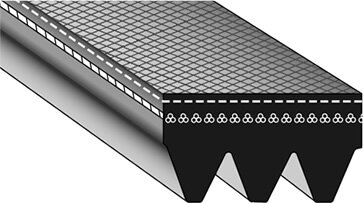
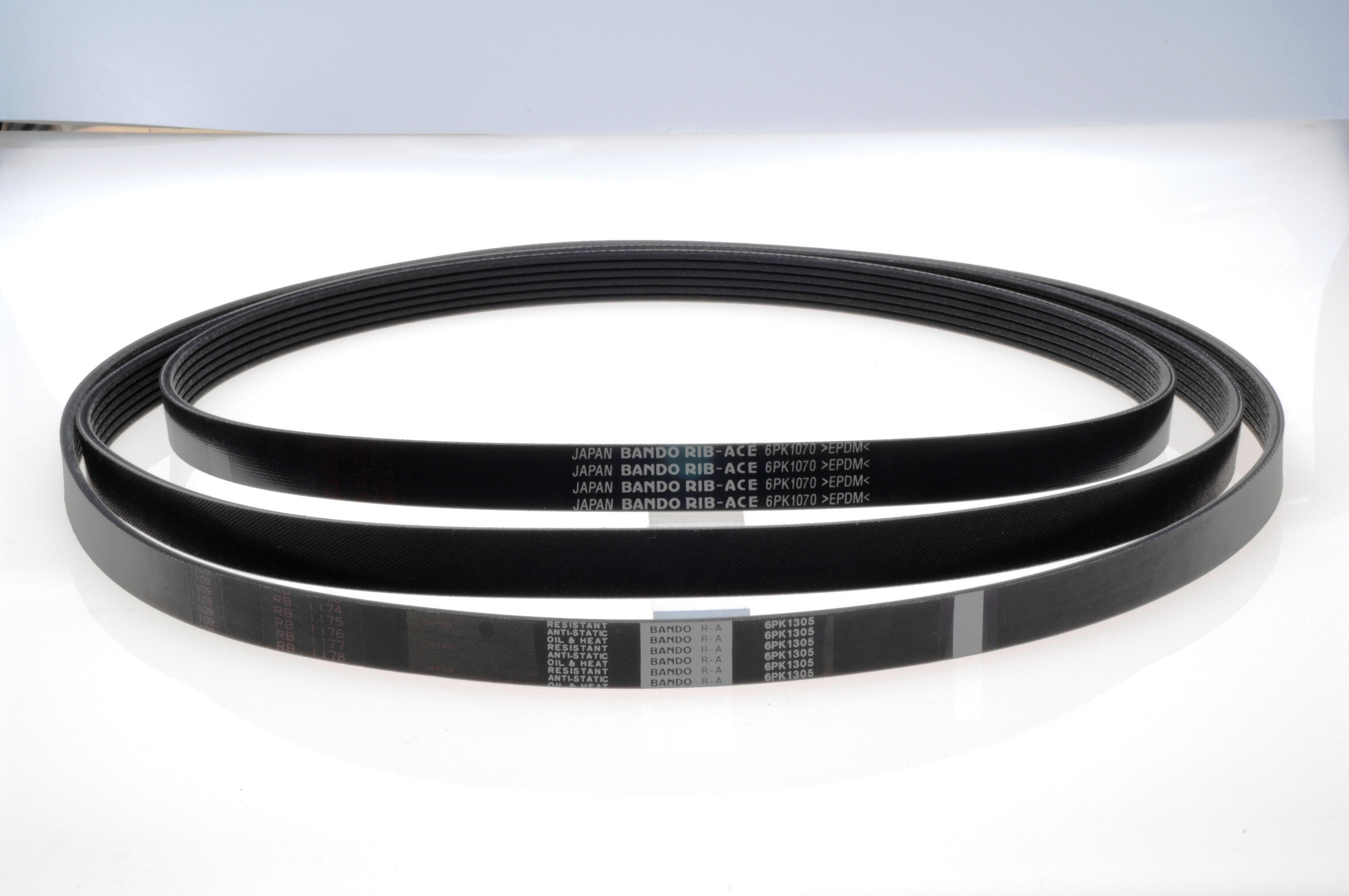
This belt combines the transmission performance of a V-belt with the flexibility of a flat belt to reduce flexural fatigue, which significantly impacts belt lifespan. It supports compact transmission systems and serpentine layouts for multiple shafts.

RIB ACE ™

Features

・The thin belt enables drive operation with small-diameter pulleys.

・Serpentine drive allows for compact transmission systems.

・Various compounds/specifications are available depending on usage conditions.

Composition

Product Marking

 △PK○○○○

・△=Number of ribs

・○○○○=Length

RIB ACE ™ for Aftermarket

The belts for the aftermarket use EPDM rubber instead of conventional CR rubber.


 Features

① Environmentally Friendly

We use EPDM rubber, which produces minimal toxic gases during incineration.

②Wide Temperature Range

The use of EPDM rubber enables operation in harsh environments from -60°C to 140°C.

③Lightweight/Thinnest Design

Lighter and thinner than CR rubber, enabling extended service life.

④Enhanced Noise Resistance

Special compound rubber improves noise performance during wet conditions (rain/high humidity).


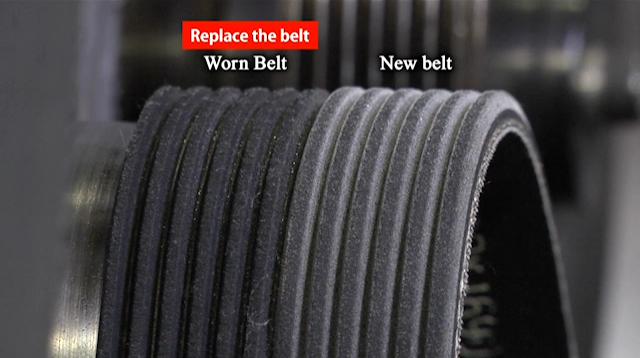
Belt Replacement Criteria

We recommend replacing belts every 3 years or 30,000 kilometers.

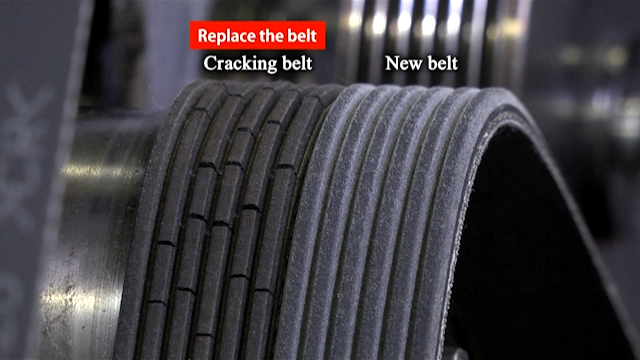
The criteria for belt replacement are determined by “wear” or “cracks.”

For wear, replace the belt when the ribs become narrowed and the pulley progresses to just before the belt's cord. For cracks, replacement is necessary when cracks occur over half the rib height or when the number of cracks exceeds the number of ribs.

Currently, the mainstream EPDM rubber is heat-resistant and less prone to cracking, so wear should be the primary replacement criteria.
 

Contact us Download catalogs & Documents

Contact us